IVF-Life Donostia (Instituto Vasco de Fertilidad), San Sebastián, Spain
IVF-Life Donostia
Instituto Vasco de Fertilidad · San Sebastián, Gipuzkoa, Spain
A fertility clinic in San Sebastián with six specialist gynaecologists, its own IVF and andrology laboratories and an operating theatre on site, so the whole treatment is carried out in one building.
A fertility clinic with its own embryology laboratory, not a collection point
IVF-Life Donostia, registered as Instituto Vasco de Fertilidad, is on Avenida de Tolosa in San Sebastián, in the Basque province of Gipuzkoa in northern Spain. It is part of the IVF-Life group, which also has clinics in Madrid and Alicante, and patients choose which of the three they attend.
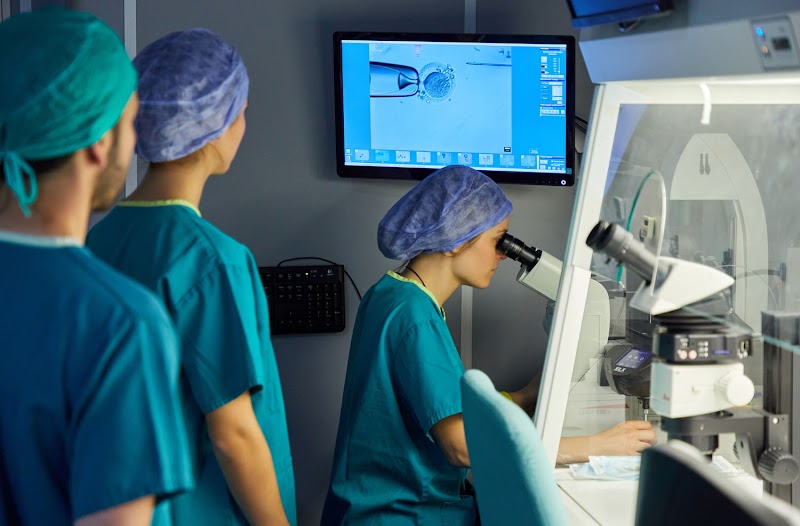
The detail that matters most in fertility treatment is where the laboratory work happens. This clinic has its own IVF and andrology laboratories and an operating theatre in the same building, so egg collection, sperm preparation, fertilisation, embryo culture and transfer all take place on site rather than samples travelling to a shared laboratory elsewhere. Embryos are cultured in a GERI incubator with time-lapse imaging, and sample movements are tracked through the Gidget electronic witnessing system, which exists specifically to prevent samples being mismatched.
The six doctors are gynaecologists who sub-specialise in assisted reproduction, and each publishes their Spanish medical registration number, their training hospitals and their postgraduate qualifications. Two of them also hold posts at Donostia University Hospital, one in its assisted reproduction unit since the unit was created, and one as a consultant in gynaecology and obstetrics. Three hold doctorates, and between them the team teaches at the University of the Basque Country, sits on Spanish Fertility Society committees and publishes research. Treatment languages across the team are Spanish, English, French, Basque and Catalan.
Dr.Visor verified this profile against the clinic's own published clinician pages, which state qualifications, training hospitals, memberships and registration numbers for every doctor individually. Success rates, patient numbers and accreditations are not published here because we have not been able to verify them from a document or an independent source.
What Spanish law allows that others do not
Spain is one of the main destinations in Europe for donor fertility treatment, and the reason is legal rather than commercial. Spanish legislation permits egg and sperm donation, requires it to be anonymous, and sets out the medical and genetic screening donors must undergo. Treatment is also open to single women, and to female couples through reciprocal IVF, which in Spain is known as the ROPA method. Several other European countries restrict or prohibit some of these options, so patients travel to access them.
Legal positions change and your own circumstances matter, including the law where you live and how a child's legal parentage is recognised when you return home. Take your own legal advice before committing to donor treatment abroad. Nothing on this page is legal advice.
What the clinic offers
Fertility treatments
Diagnostic tests
Laboratory techniques
Complex cases
Gynaecology
Dr.Visor does not publish treatment prices. Fertility treatment costs depend on the protocol, the medication required and whether donor gametes or genetic testing are involved. Ask for a written, itemised quotation before you travel, and check what a second cycle would cost.
Who treats you at Donostia
Five of the six doctors publish a Spanish medical registration number, shown here so you can check it against the register of the relevant provincial medical college. Everything in these cards comes from the clinic's own clinician pages.
Medical team

Dr Elisa Pérez Larrea
Medical Director, Gynaecologist in Assisted Reproduction
Reg. 203311163At the Donostia clinic since 2015, combining patient care with the medical director role. Qualified in Medicine and Surgery at the University of Zaragoza in 2009, specialised in obstetrics and gynaecology at the University of Oviedo in 2014, and holds a master's degree in Human Reproduction from the Complutense University of Madrid. Certified at levels I, II and III in obstetric and gynaecological ultrasound by the ultrasound section of SEGO. Member of SEGO and the Spanish Fertility Society. Her work covers ovarian stimulation, donor selection, egg donation, embryo adoption, fertility preservation, endometriosis and single motherhood.

Dr María José Iñarra Velasco
Gynaecologist in Assisted Reproduction
Reg. 202007003
Qualified at the University of Navarra, with specialties in both
gynaecology and obstetrics and in family and community medicine, plus
a master's degree in assisted human reproduction and doctoral
research in molecular biology at the University of the Basque
Country. She has worked in public hospitals across Navarre, La Rioja
and the Basque Country, and has been part of the assisted human
reproduction unit at Donostia University Hospital since it was
created. She teaches gynaecology and obstetrics at the University of
the Basque Country medical faculty. Member of ESHRE and the Spanish
Fertility Society, and for ten years sat on the permanent committee
of its public centres interest group. Trained in endoscopic surgery
and laparoscopy at the University of Auvergne.
Languages: Spanish, English, French and Basque.

Dr Pedro Royo Manero
Gynaecologist in Assisted Reproduction
More than twenty years in gynaecology, obstetrics and assisted
reproduction. Qualified in Medicine and Surgery at the University of
Zaragoza, trained in obstetrics and gynaecology at the Clínica
Universidad de Navarra, and holds a PhD in Medicine from the
University of Navarra awarded in 2008 and a master's in Human
Reproduction from IVI and Rey Juan Carlos University. Holds Level IV
accreditation in obstetric and gynaecological ultrasound. Member of
SEGO since 2004 and co-founder of its residents' section, member of
the Spanish Fertility Society since 2013, served on the Spanish
Ministry of Health national commission for gynaecology and
obstetrics, and sat on the board of the ISUOG 3D and 4D ultrasound
special interest group from 2015 to 2021. His focus includes low
ovarian response, ovarian reserve and follicular monitoring by 3D
ultrasound.
Languages: Spanish and English.

Dr Pilar Carrillo Torres, PhD
Gynaecologist in Assisted Reproduction
Reg. 080854792
Qualified in Medicine at the University of Barcelona and trained in
obstetrics and gynaecology at Hospital Clínic de Barcelona from 2018
to 2022, then worked in assisted human reproduction at Barcelona IVF
until 2025. Holds master's degrees in minimally invasive
gynaecological surgery and in human reproductive medicine, and a PhD
in Medicine awarded cum laude by the University of Barcelona. She
combines clinical work with research, including hormonal treatment in
endometriosis and adenomyosis, lifestyle factors in fertility, and
machine learning models for predicting embryo quality and pregnancy
probability.
Languages: Spanish, English, French and Catalan.

Dr Sara Fueyo Pestaña
Gynaecologist in Assisted Reproduction
Reg. 202008718
Qualified in Medicine at the University of Oviedo and completed
specialist training in gynaecology and obstetrics at Donostia
University Hospital, where she has been a consultant since June
2023. Holds master's degrees in minimally invasive gynaecology and
in human reproduction, with training placements in obstetric
ultrasound at Vall d'Hebron and in high-risk obstetrics at Sant Pau
in Barcelona. Her interests include endometriosis, adenomyosis and
gynaecological oncology alongside reproductive medicine.
Languages: Spanish, English and French.

Dr Verónica Corona García
Gynaecologist in Assisted Reproduction
Reg. 280866947
Qualified in Medicine and Surgery at the University of Carabobo, with
the degree recognised in Spain, and specialised in gynaecology and
obstetrics at the Central University of Venezuela in 2013. Holds a
diploma in reproductive endocrinology and fertility and a master's
degree in Human Reproduction from the Complutense University of
Madrid awarded in 2024, with hospital training in assisted
reproduction. She has worked in assisted reproduction units and
emergency gynaecology and obstetrics in Spain and Latin America, and
focuses on primary and secondary infertility.
Languages: Spanish, English and French.
Embryology and laboratory
María Velasco
Laboratory Director

Mario Fernández
Embryologist

Sara Puerta
Embryologist

Leire Serna
Embryologist

María Pérez
Laboratory Technician
The clinic also runs a nursing team and a dedicated patient care team, who are listed on its own site by first name. Dr.Visor publishes names and roles only where the clinic states them in full.
Where the laboratory work happens
In IVF the laboratory matters as much as the consulting room, because fertilisation and the first days of embryo development happen there. This clinic runs its own facilities rather than sending work out.
The clinic displays quality certification marks in its website footer. Dr.Visor publishes an accreditation only with a certificate number or document, so none are listed above. We have asked the clinic for these and will add them once confirmed.
Inside IVF-Life Donostia


Photographs are the clinic's own, taken from its published location pages. The operating theatre and laboratory shown here are in the same building as the consulting rooms.
Films from the IVF-Life group
These are the group's own films from its IVF-Life channel, covering the approach shared across the Donostia, Madrid and Alicante clinics rather than the Donostia site specifically.
IVF-Life: We believe in science
IVF-Life: Never stop believing in science
What patients rate the clinic
Fertility treatment is a long and demanding process, and reviews of fertility clinics tend to be written by people who have come out of it either very satisfied or very disappointed. A 4.9 average sustained across 206 reviews is a meaningful signal for that reason. Google is also a platform the clinic cannot edit, which is why Dr.Visor publishes ratings from it rather than from a clinic's own website testimonials.
Dr.Visor publishes the aggregate rating only and does not reproduce individual reviews. Read them in full on Google, where you can also see how recent they are. A rating reflects the experience of care, not the likelihood that treatment will succeed. Ask the clinic directly for its outcome figures and for the methodology behind them.
What stands out
When the clinic is open
Fertility treatment is governed by the cycle rather than the calendar, so some monitoring appointments and procedures are scheduled at short notice. Confirm with the clinic how weekend monitoring is handled before you plan travel dates.
Before you travel
Where is the clinic and when is it open?
Avenida de Tolosa 71-73, 20018 San Sebastián (Donostia), in the province of Gipuzkoa in the Basque Country, northern Spain. Open Monday to Friday from 08:00 to 20:00. Bus lines 5, 25, 33, 40 and 45 stop at or near the clinic.
Why do patients travel to Spain for fertility treatment?
Spanish law permits egg and sperm donation, which is anonymous and regulated, with donors medically and genetically screened. Treatment is also available to single women and to female couples through reciprocal IVF, known in Spain as the ROPA method. These options are restricted or unavailable in a number of other European countries, which is why Spain has become one of the main destinations in Europe for donor treatment.
Can the whole treatment be completed at this clinic?
Yes. The Donostia clinic has its own IVF and andrology laboratories and an operating theatre on site, so diagnosis, egg collection, laboratory work, embryo culture and transfer all take place in the same building rather than samples being sent elsewhere.
Can I be seen in English?
Yes. Across the medical team the languages stated are Spanish, English, French, Basque and Catalan, and the clinic runs a dedicated patient care team for international patients. Each patient is assigned a named point of contact.
Do I have to travel for the first appointment?
No. The clinic offers a first consultation and an online informational meeting remotely, so the initial assessment and treatment plan can be agreed before any travel is booked. Follow-up after treatment can also be handled remotely by video.
How does Dr.Visor verify a clinic?
We check the clinic against independent sources rather than taking its marketing at face value. For this profile that meant the clinic's own published clinician pages, which state each doctor's qualifications, training hospitals, professional memberships and Spanish medical registration number. We do not publish success rates, patient counts, accreditations or comparative claims that we cannot verify from a document or an independent platform.
Enquire about IVF-Life Donostia
Get Your Quote
Choose a free enquiry, or speak to a doctor from a Dr.Visor verified member clinic for £50, fully deducted from your treatment if you go ahead.